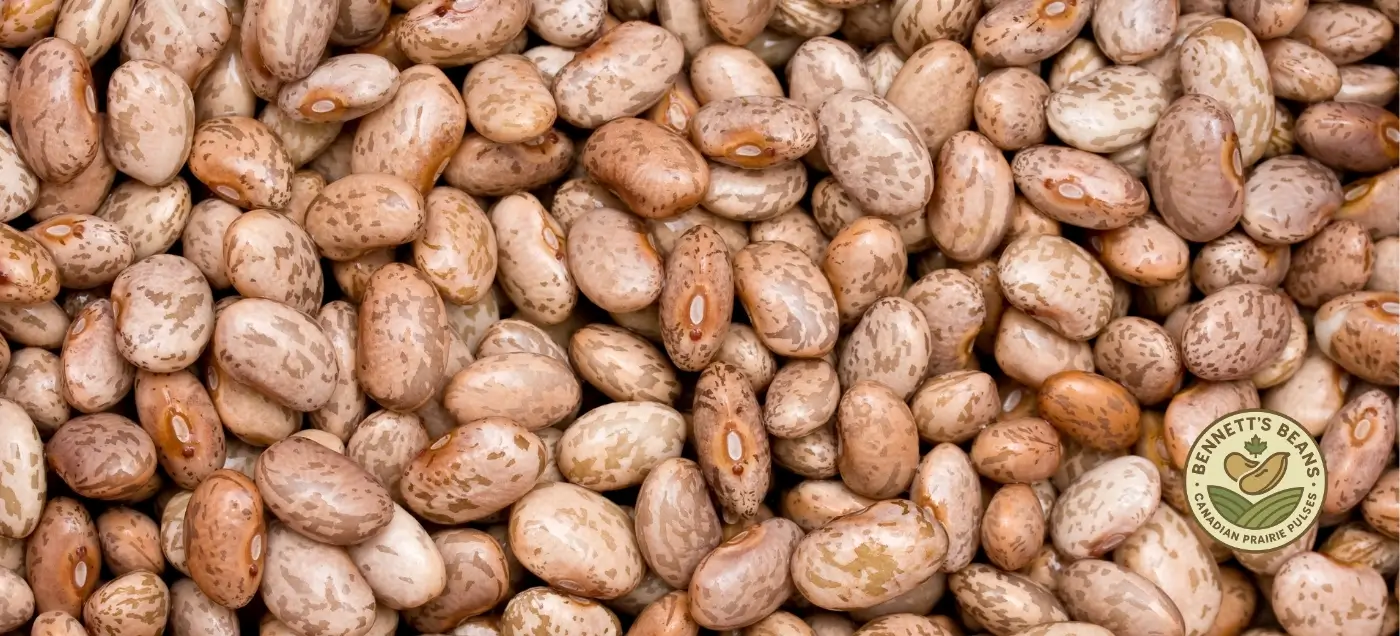
Canadian Pinto Beans, Bulk, Wholesale Supplier & Exporter
Bennett’s Beans supplies Canadian pinto beans for wholesale and bulk buyers who need reliable export-ready lots for food manufacturing, distribution, and private-label programs. Our pinto bean supply supports bulk container orders with agreed specifications, packaging formats, and shipment planning tailored to the destination market.
- Contract-backed supply (seasonal availability)
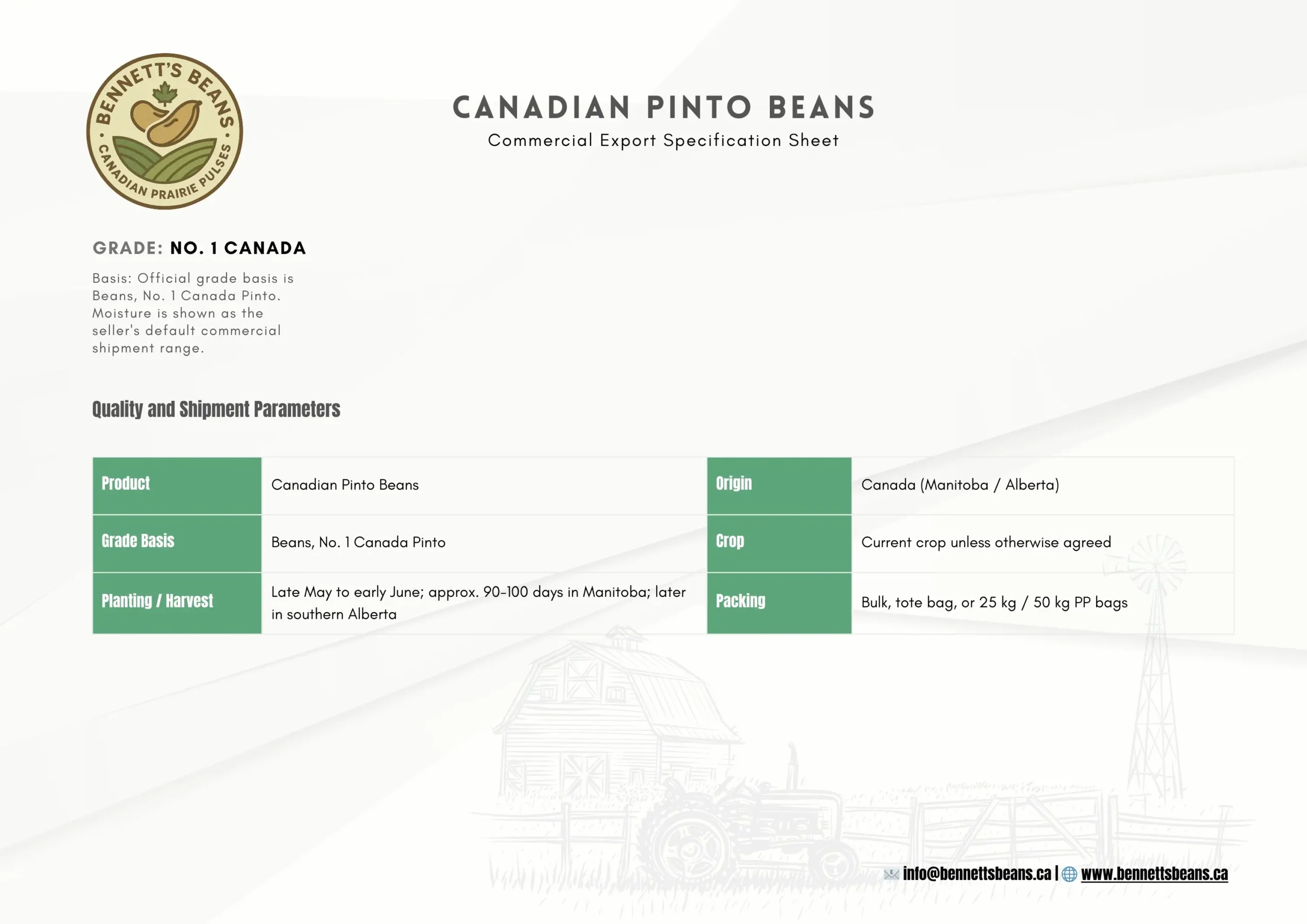
- Specs confirmed by lot: moisture • purity • defects (as agreed)
- MOQ: 1 × 20-ft FCL (typical)
- Packaging: 25 kg / 50 kg bags or 1-ton food-grade totes (as required)
- Incoterms: FOB / CFR / CIF (as applicable)
- Documents: invoice, packing list, B/L; phytosanitary when required; COA/testing on request
Speckled Quality – Canadian Pinto Beans Explained
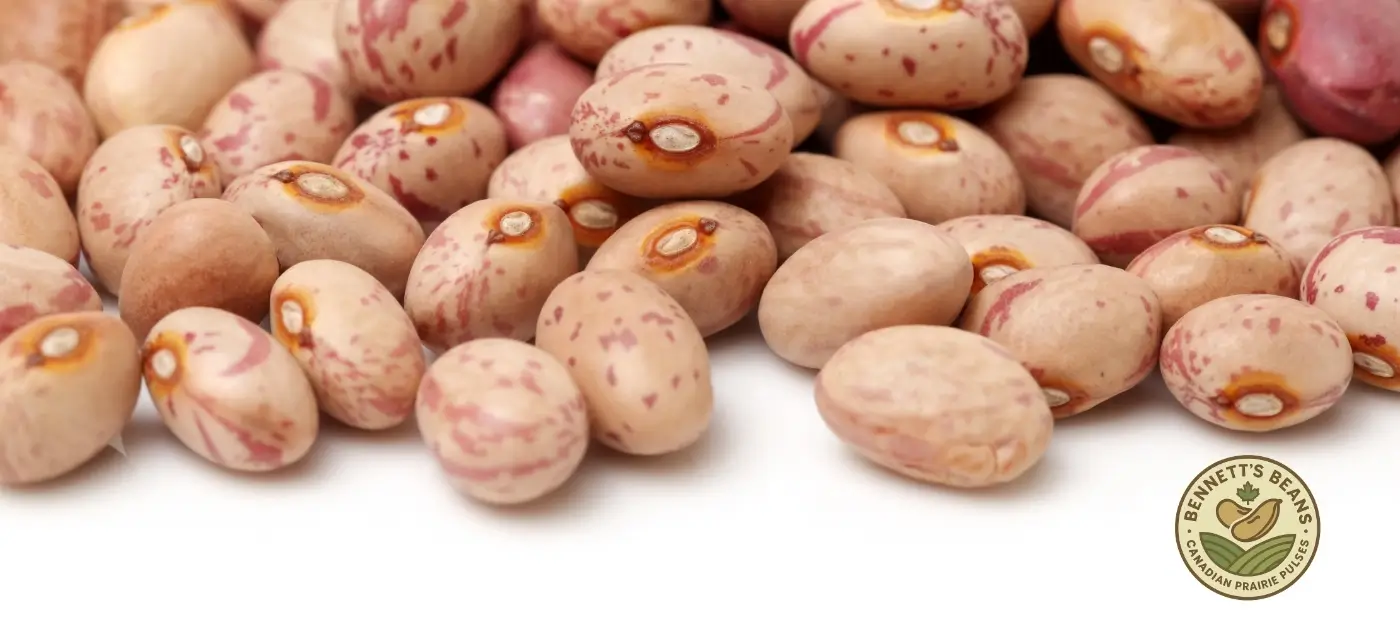
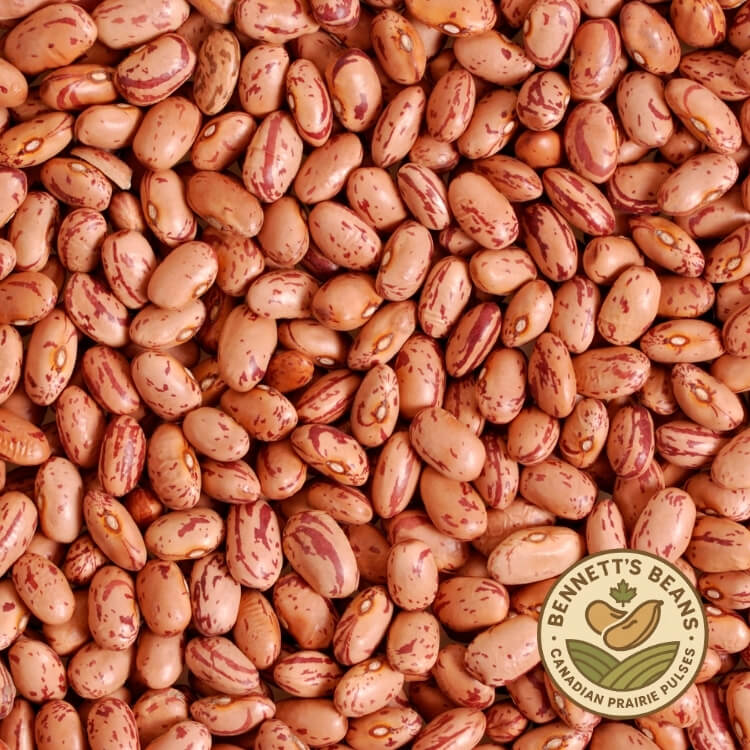
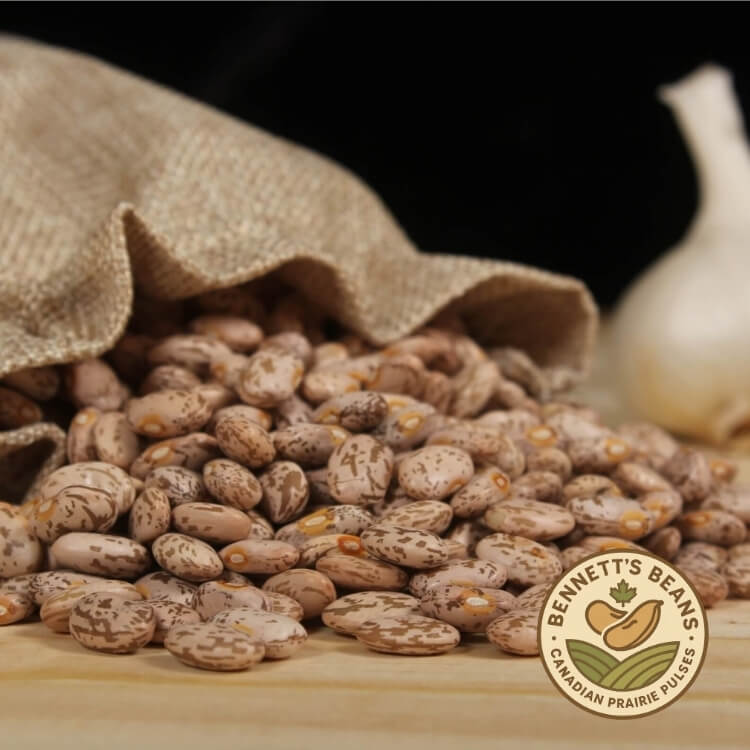
Canadian pinto beans have a coffee-brown speckle that turns salmon-pink after cooking. They hold their shape well in refried-style applications, Tex-Mex fillings, and pressure-cooked ready meals. In addition, they perform reliably in commercial retort (industrial canning/sterilization). As a result, processors often see consistent texture and thickness with fewer split skins.
Typical Export Specifications (Confirmed by Lot)
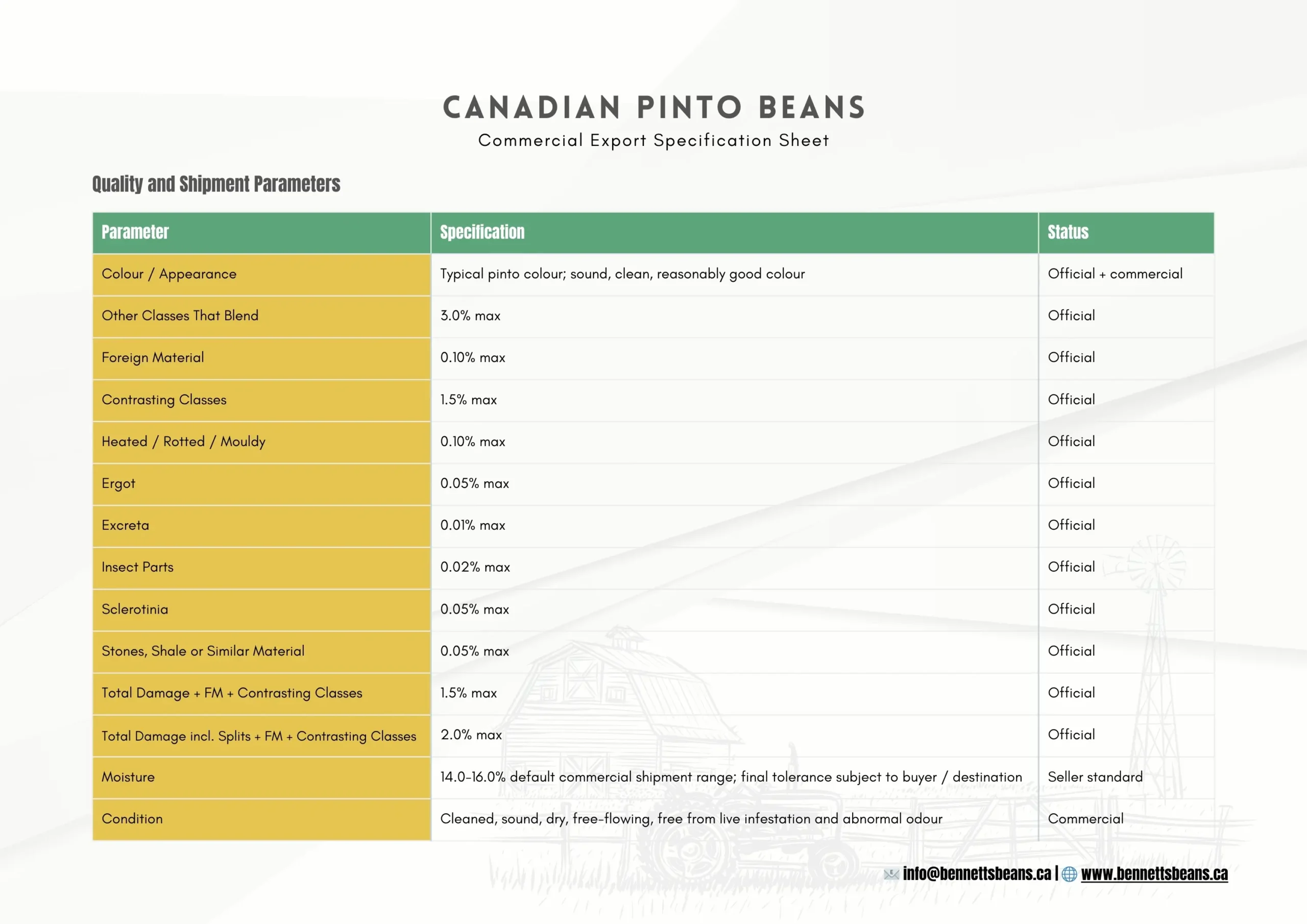
We confirm specifications per lot against the buyer’s requirements. Typical export targets may include:
- Moisture: up to 14% (as agreed)
- Purity: 99%+ (as agreed)
- Defect tolerances & sizing: confirmed at quotation
Shipping & Incoterms
Export shipments can be coordinated from Canada based on destination, carrier schedules, and seasonal availability. We quote FOB, CFR, or CIF (as applicable) depending on destination and booking availability. Finally, we confirm transit and lead times at quotation and booking.
Prairie-Grown Pinto Beans – Canadian Supply Regions
Pinto beans are produced across established Canadian growing regions, including Saskatchewan, Alberta, Manitoba, and Ontario. Therefore, buyers can plan programs around seasonal supply and contracted volumes. We align cleaning, grading, and packing to the agreed lot specifications.
Quality Control & Load-Out Verification
We run pre-shipment quality checks to confirm alignment with the agreed specifications (moisture, purity/foreign material limits, and defect tolerances). In addition, we provide lot identification and supporting documents for traceability. Additional testing can be arranged upon request when destination requirements call for it.





Packaging, MOQ & Load Format
Typical MOQ is 1 × 20-ft FCL. We offer packaging options such as 25 kg / 50 kg bags and 1-ton food-grade totes, depending on buyer requirements. However, final pack format and labels depend on destination and customer program needs.
Documentation (COA / Phytosanitary / Export Docs)
We coordinate documentation based on destination-market requirements. Common documents include commercial invoice, packing list, and bill of lading. Phytosanitary is included when required, and COA/testing is available upon request.
Buyer FAQs
Do you sell online or publish pricing?
We don’t publish prices online. We quote based on specification, volume, packaging, destination, and Incoterms. Request a quote to receive a program-specific offer.
What is the typical MOQ for export?
Typical MOQ is 1 × 20-ft FCL. Larger programs are available based on season and contracted volume.
What packaging formats do you offer?
We offer 25 kg / 50 kg bags and 1-ton food-grade totes, depending on buyer requirements and destination needs.
Which documents can you provide?
Common documents include commercial invoice, packing list, and bill of lading. Phytosanitary is provided when required, and COA/testing is available upon request.
Which Incoterms do you support?
We can quote FOB, CFR, or CIF (as applicable), depending on destination and booking availability.
Are you a grower or a supplier?
We are a supplier. We secure supply through contracted growers and coordinate export-ready cleaning and packing through qualified partners.
QUALITY CONTROL & LOAD-OUT VERIFICATION
Quality checks are coordinated prior to shipment to confirm alignment with the agreed buyer specifications (e.g., moisture targets, purity/foreign material limits, and defect tolerances). Lot identification and documentation can be provided to support traceability, with additional testing coordinated upon request and based on destination-market requirements.